
The Craft · Extraction
Releasing the juice.
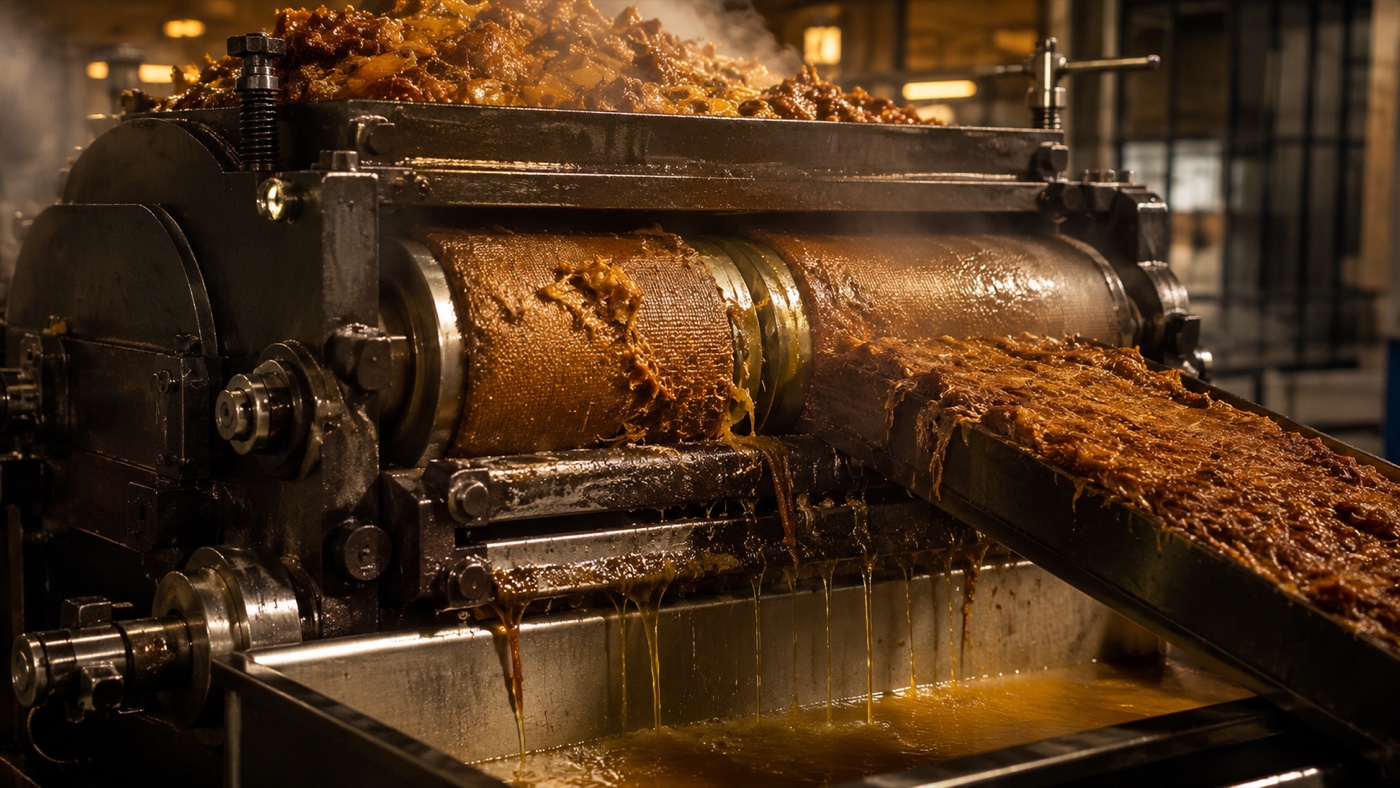
Once the agave is cooked and its sugars are ready, the juice has to be separated from the fiber. How that is done shapes texture, weight, and the first layer of character, long before fermentation or oak.
Tahona
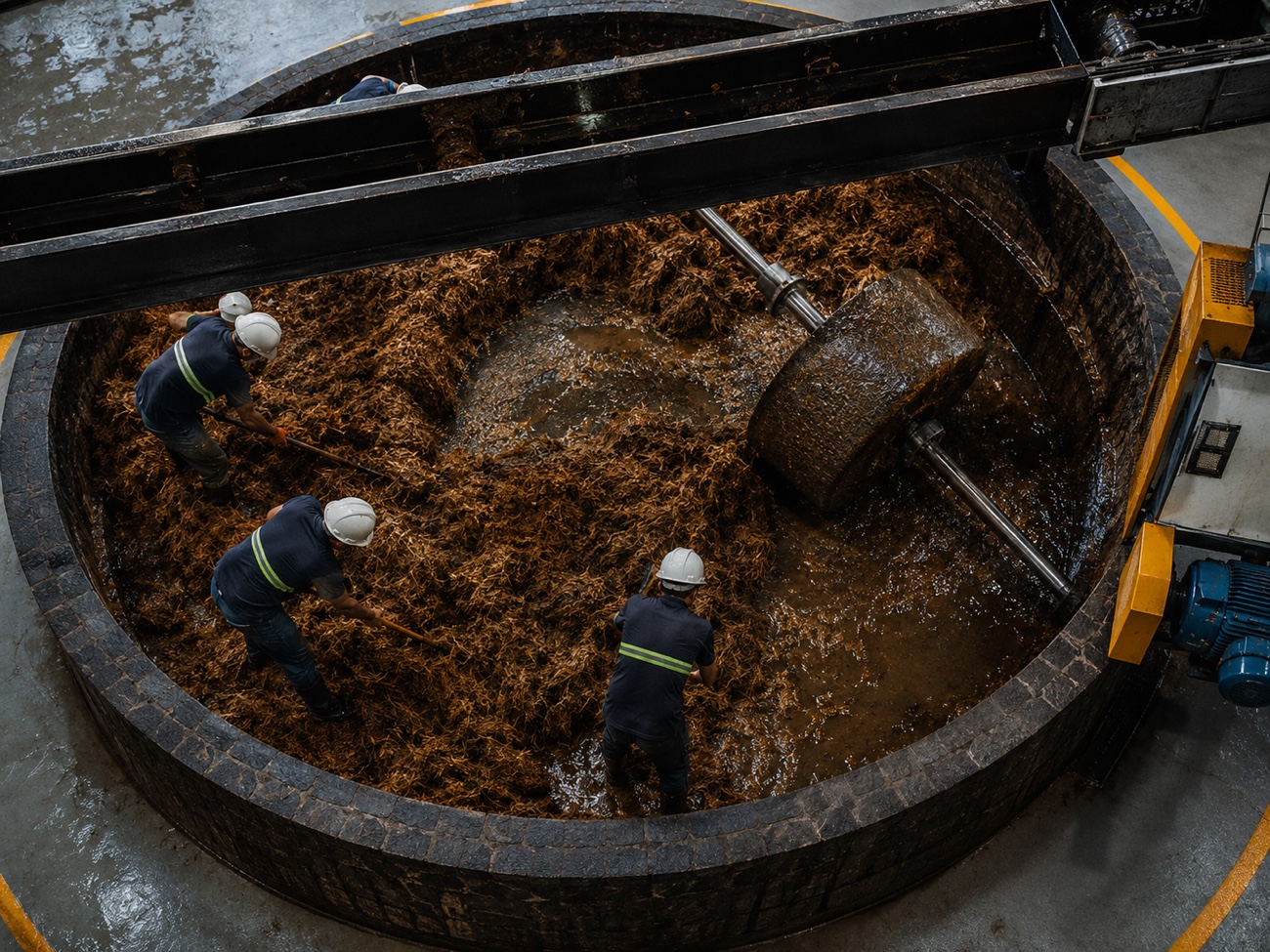
The oldest method: a volcanic stone wheel slowly crushes the cooked agave, pressing out a juice that carries fiber and a distinctly earthy, mineral character. Slow, low-yield, and prized for the texture it gives.
Roller Mill
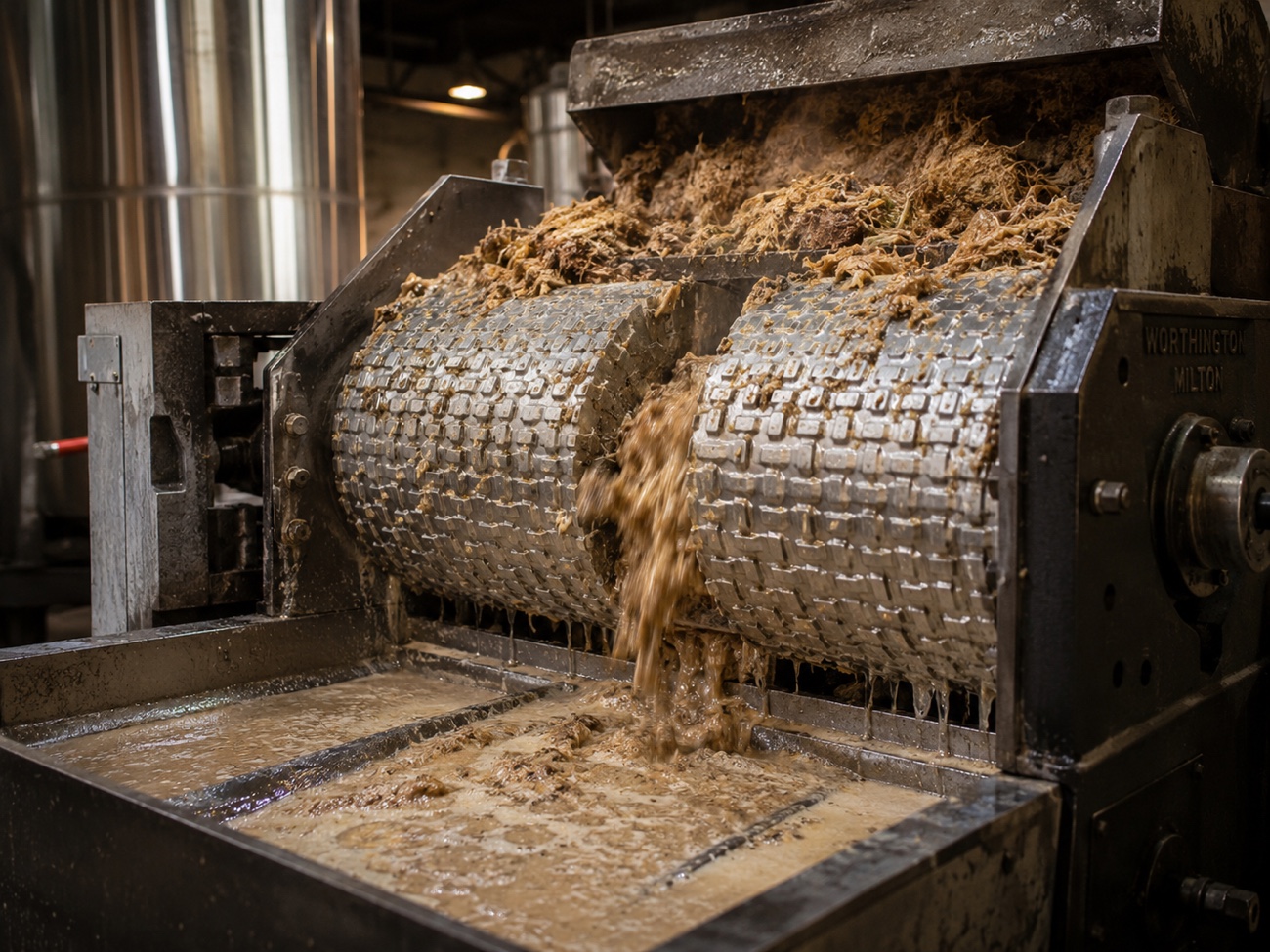
The modern standard: mechanical rollers shred and press the agave efficiently, producing a clean, consistent juice. Higher yield, precise control, and a brighter agave focus.
These are the methods used across the category, not a list of what every cask of ours went through. Where a barrel uses a specific method, it's recorded in that barrel's specification sheet, so the catalog stays honest to how each cask was actually made.