
The Craft · The Oak
The cask decides.
Of everything that shapes an aged tequila, the barrel matters most. Wood origin, what the cask held before, its size, and how its interior was treated by fire. Each of those pulls the spirit in a different direction. This is where time and oak do their work.
Light
Medium
Heavy
Charred
- Light: Fresh oak, soft vanilla, bright character.
- Medium: Caramel, baking spice, balance.
- Heavy: Toffee, clove, dark structure.
- Charred: Smoke, mocha, a mellow, rounded finish.
Oak & grain
The wood makes the difference
Each oak leaves its own signature on the spirit.

American oak
Bold, sweet, and generous. High in vanillin and lactones, it gives the roundest, sweetest profile of the three: vanilla, caramel, coconut, warm spice. The workhorse of añejo aging.

French oak
Finer grained and more restrained. It trades vanilla for spice, dried fruit, and a fine, silky tannin.

Hungarian oak
Central Europe's prized cooperage oak, tight-grained and distinctive. French-like structure with a warmer baking-spice and toasted-nut character, increasingly prized for aged spirits.
Toast & char
How fire shapes flavor
Before a barrel is filled, its interior is treated with heat. Toasting caramelizes the wood's natural sugars; charring creates a carbon layer that filters and mellows the spirit. The deeper the treatment, the sweeter and smokier the result. The full spectrum is at the top of this page.
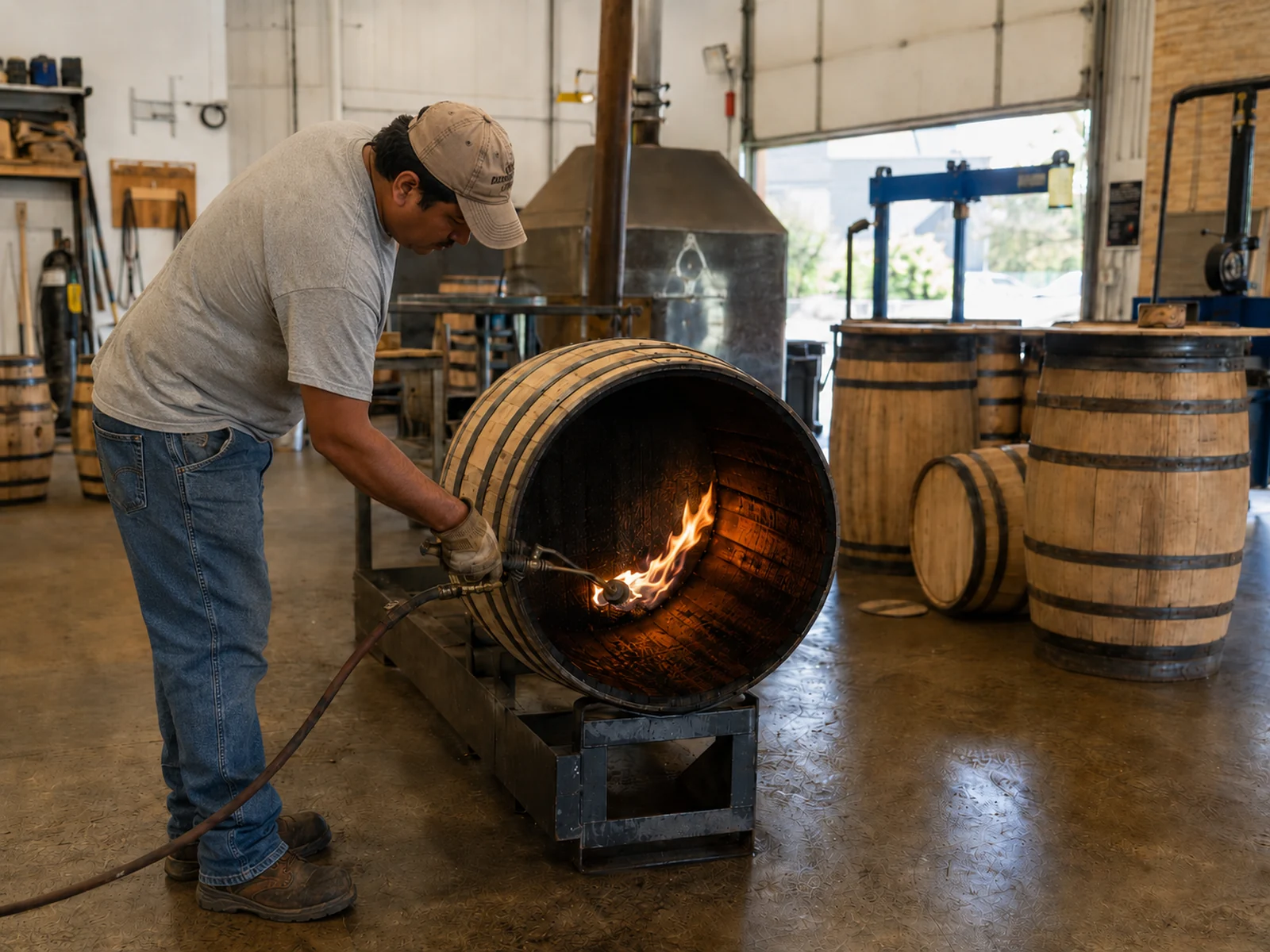
Every Tusk'ave barrel records its oak and its toast level. On the live inventory you can see both reflected in the cask itself, before you ever read the spec.